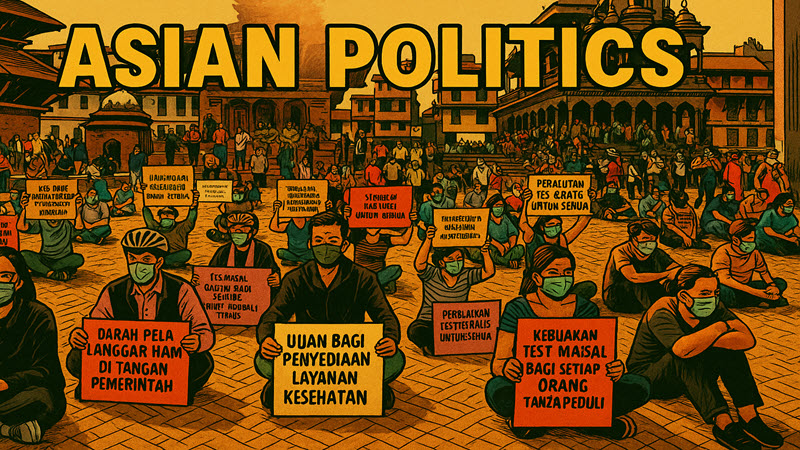
Understanding how authoritarian regimes respond to citizens remains a puzzle in political science. This paper examines local government responsiveness using an online field experiment with 2,103 Chinese counties 📊.
Data & Methods: A large-scale digital intervention tested the effects of different incentives on county officials' online responsiveness ⚖️.
The study revealed that both top-down oversight (threats of tattling to higher authorities) and bottom-up societal pressure (threats of collective action) significantly increased responsiveness 💪. However, identifying as a loyal party member did not influence responsiveness levels 🤔.
Key Findings: Results show:
Real-World Implications: These findings demonstrate that authoritarian responsiveness isn't limited to coercion alone, but emerges from complex interplays between institutional pressures and societal dynamics. This nuanced understanding offers new perspectives for analyzing governance in non-democratic contexts 🌍.
| Sources of Authoritarian Responsiveness: A Field Experiment in China was authored by Jennifer Pan, Jidong Chen and Yiqing Xu. It was published by Wiley in AJPS in 2016. |