Religious warnings from the Catholic Church against Nazism failed to sway voters. Catholics were significantly less likely than Protestants to support the NSDAP, despite explicit discouragement.
Data & Methods
This study analyzed electoral data and historical records across Weimar Germany's constituencies, focusing on religious demographics (Catholic vs. Protestant).
Key Findings
Contrary to expectations based on the Church's strong stance and influence, its warnings did not prevent Catholics from supporting the Nazis when their interests diverged.
The clear alignment between Protestant elites and Nazi ideology appears to have outweighed Catholic reluctance, despite the latter group being explicitly targeted.
Why It Matters
This article develops a theoretical framework explaining religious groups' varying susceptibility to elite political influence during elections.
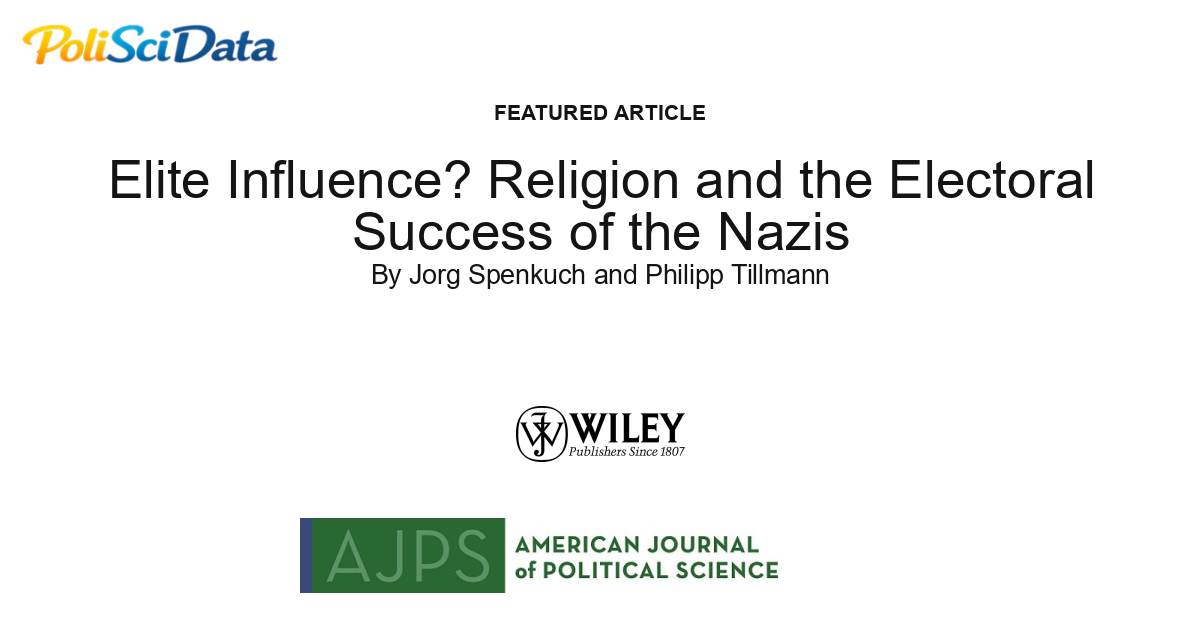
| Elite Influence? Religion and the Electoral Success of the Nazis was authored by Jorg Spenkuch and Philipp Tillmann. It was published by Wiley in AJPS in 2018. |